



Most patients attribute perimenopause weight gain to a sudden loss of personal discipline. The clinical data reveals a completely different reality. You are not losing a battle against your willpower. Your body has simply changed the rules of how it burns energy. During this transition, declining estrogen levels trigger a cascade of metabolic shifts that directly impair how your cells process fuel. This creates a physiological plateau where standard calorie deficits and exercise routines stop producing results.
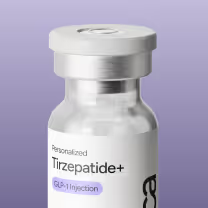
This guide explores how tirzepatide for perimenopause weight gain addresses these specific biological changes. By targeting the exact hormone receptors affected by this life stage, new dual agonist medications help restore metabolic function. We will examine the 2026 clinical data explaining why this treatment works when traditional methods fail.
Key Takeaways
- Tirzepatide targets both GIP and GLP-1 receptors to repair the specific metabolic signaling disrupted by declining estrogen levels.
- Clinical trials show patients in perimenopause lost an average of 23 percent of their body weight over 72 weeks.
- Dual agonist treatments directly reduce visceral fat storage in the midsection caused by perimenopause insulin resistance.
- Combining hormone replacement therapy with tirzepatide yields roughly 35 percent greater weight reduction compared to medication alone.
The Hormone Math Problem: Why Willpower Fails in Perimenopause
Estrogen is a critical regulator of your entire metabolism. When estrogen levels drop during perimenopause, your body loses its natural ability to process sugar effectively. This hormonal shift triggers perimenopause insulin resistance. Perimenopause insulin resistance is a biological state where your cells stop responding efficiently to blood sugar signals and begin storing energy as fat instead of burning it.
It is like your internal engine is suddenly using the wrong type of fuel.
This resistance directly alters where your body stores fat. Historically, estrogen promotes fat distribution in the hips and thighs. As estrogen declines, fat storage relocates to the abdomen. This creates the stubborn menopause belly fat that patients find so deeply frustrating. The CDC notes that visceral and abdominal fat accumulation carries significant metabolic health risks that extend well beyond appearance.
Your natural hormone production also takes a significant hit. Research shows that declining estrogen significantly reduces your body's natural production of GLP-1. GLP-1 is a hormone your gut releases after eating that tells your brain you are full and slows digestion to make that feeling last. With 50 percent less GLP-1 in your system, you naturally feel hungrier.
Your brain simply does not receive the signal to stop eating.
This combination of increased hunger and decreased insulin sensitivity creates a mathematical impossibility for standard diets. You are fighting a biological mandate to store fat. The relationship between estrogen and GLP-1 receptors has been documented in peer-reviewed research, with studies on PubMed confirming that incretin hormone signaling is directly modulated by ovarian hormones. Understanding this endocrine shift is the first step in finding a treatment that actually works for insulin resistance in midlife.
Beyond Semaglutide: Why the Dual Agonist Is Different
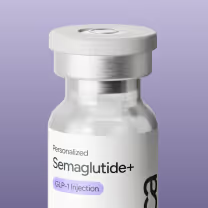
When evaluating tirzepatide vs semaglutide for menopause, the distinction lies in how many metabolic pathways the medication activates. Semaglutide is a single receptor agonist. It only mimics GLP-1 to quiet food noise and slow gastric emptying. Tirzepatide is a GIP and GLP-1 dual agonist.
It targets two distinct hormone receptors simultaneously.
This dual action is particularly important for patients experiencing midlife hormonal shifts. The addition of GIP is the defining factor. GIP is an incretin hormone that improves how your fat cells buffer and store lipids while increasing your sensitivity to insulin. While GLP-1 primarily communicates with your brain to manage appetite, GIP communicates directly with your adipose tissue. A detailed tirzepatide drug profile on the NCBI Bookshelf outlines the distinct receptor binding activity that separates it from single agonist alternatives.
This communication restores metabolic flexibility. Metabolic flexibility is your body's ability to seamlessly switch between burning carbohydrates and burning stored fat for energy. Perimenopause heavily impairs this flexibility. By activating the GIP receptors, tirzepatide helps your fat cells release stored energy more easily.
That matters. It means you are not just eating less. You are physically repairing the incretin effect. The incretin effect is the biological process where your gut hormones stimulate insulin release in response to eating food. Restoring this process corrects the underlying dysfunction rather than merely masking the symptoms.
This is why dual agonists provide a more robust metabolic reboot. For patients dealing with the specific insulin resistance triggered by estrogen loss, targeting both pathways yields superior clinical outcomes. If you are weighing branded versus compounded options, the Zepbound product page provides an overview of brand-name tirzepatide for comparison.
| Feature | Semaglutide | Tirzepatide |
|---|---|---|
| Receptor type | Single agonist (GLP-1 only) | Dual agonist (GLP-1 + GIP) |
| Primary appetite mechanism | Signals fullness to the brain | Signals fullness to the brain + improves fat cell metabolism |
| Insulin sensitivity | Improved via GLP-1 pathway | Improved via both GLP-1 and GIP pathways |
| Metabolic flexibility | Partially restored | More fully restored via adipose tissue signaling |
| Relevance to perimenopause | Addresses appetite and gastric emptying | Addresses appetite, gastric emptying, and insulin resistance from estrogen loss |
Reversing the Menopause Middle: 2026 Clinical Data
The clinical evidence supporting dual agonists for this specific life stage is compelling. In a 2025 post hoc analysis of the SURMOUNT-1 trial, researchers isolated the data specifically for women in perimenopause. These participants lost an average of 23 percent of their body weight over 72 weeks (Source: Hurtado Andrade et al., The Lancet 2025).
The placebo group in the exact same demographic lost only 3 percent.
This weight loss is not just subcutaneous fat. The data indicates massive success with visceral fat reduction. Visceral fat is the dangerous metabolically active fat stored deep inside the abdomen around your internal organs. It is the primary driver of the thickened midsection many patients experience during perimenopause. Peer-reviewed research indexed on PubMed Central confirms the superior visceral fat reduction profile of dual agonist therapy compared to lifestyle intervention alone.
Clinical trials show that participants achieved an average waist circumference reduction of 20 centimeters (Source: Hurtado Andrade et al., The Lancet 2025). That equates to roughly 7.8 inches.
Furthermore, up to 52 percent of women in these trials achieved a healthy waist-to-height ratio. This specific metric indicates a significant reversal of organ fat accumulation (Source: Hurtado Andrade et al., The Lancet 2025). The medication specifically targets the dangerous adipose tissue that standard dieting cannot access.
The benefits extend far beyond aesthetics. A recent study found that intentional weight loss of more than five pounds in women over 50 was associated with a 12 percent reduction in all-cause mortality (Source: JAMA Network Open 2025).
These outcomes remain consistent regardless of exact reproductive stage. The 2025 SURMOUNT analysis confirmed that 98 percent of perimenopausal participants achieved at least 5 percent total body weight loss. The medication works by circumventing the hormonal blockades that typically stall progress. Before starting treatment, reviewing tirzepatide safety information with your provider ensures candidacy is properly assessed.
| Outcome | Tirzepatide group | Placebo group |
|---|---|---|
| Average total body weight loss | 23% over 72 weeks | 3% over 72 weeks |
| Mean waist circumference reduction | 20 cm (~7.8 inches) | Not reported |
| Achieved healthy waist-to-height ratio | Up to 52% | Not reported |
| Achieved ≥5% total body weight loss | 98% | Not reported |
The Science of Synergy: Combining Tirzepatide and HRT
Many patients view menopause symptom management and metabolic health as two entirely separate silos. Recent clinical research proves they are deeply interconnected. When considering hormone replacement therapy and weight loss, combining treatments often yields the most dramatic physiological improvements.
A breakthrough 2026 observational study from the Mayo Clinic evaluated women using systemic hormone therapy alongside tirzepatide. The researchers found that these patients lost 35 percent more weight than those using tirzepatide alone (Source: Mayo Clinic News Network 2026).
This significant gap highlights a powerful biological synergy.
Estrogen naturally supports and regulates your body's incretin system. When you introduce hormone replacement therapy, you stabilize the estrogen decline. This stabilization essentially primes your cells. It makes your GLP-1 and GIP receptors highly receptive to the medication. ScienceDirect hosts a growing body of peer-reviewed literature on estrogen and GLP-1 receptor cross-talk confirming that hormonal priming meaningfully amplifies incretin-based therapies.
You are giving your body both the blueprints and the tools to rebuild your metabolism. The hormone therapy restores the foundation. The dual agonist medication provides the active metabolic repair.
This dual pathway approach represents the 2026 gold standard for midlife metabolic care. It directly addresses the frustration of patients who start hormone therapy to cure hot flashes only to find the scale continues to creep upward.
At Yücca, our clinical protocols recognize this interconnected reality. We evaluate your entire endocrine profile. Treating the symptoms in isolation rarely produces lasting results. A coordinated strategy ensures that your medications work together rather than fighting an uphill battle against your biology. You can learn more about how Yücca's clinical process works before your first consultation.
Frequently Asked Questions
Why is it so hard to lose weight during perimenopause?
During perimenopause, declining estrogen levels significantly reduce your body's natural production of GLP-1 and decrease insulin sensitivity. This hormone math problem causes the body to store fat more easily, even if your diet and exercise habits remain perfectly consistent. Willpower cannot overcome this physiological shift. Your cells are actively resisting fat breakdown due to the altered endocrine environment. MedlinePlus provides a patient-friendly overview of weight control and the hormonal factors that affect it.
Does tirzepatide work for perimenopause weight gain?
Yes. Tirzepatide is a dual GIP and GLP-1 receptor agonist that addresses the specific metabolic triggers of perimenopause. By mimicking these hormones, it improves insulin sensitivity and targets visceral fat. 2026 clinical data indicates women in perimenopause achieve significant weight loss results similar to premenopausal users. See the tirzepatide drug information page for a full clinical profile of the active ingredient.
Is tirzepatide better than semaglutide for menopause weight loss?
Clinical studies suggest tirzepatide offers superior weight loss results compared to semaglutide for this specific demographic. Tirzepatide's dual action mechanism targets both GLP-1 and GIP receptors simultaneously. This provides a more robust metabolic reboot, which is particularly effective for reversing the deep insulin resistance common in perimenopausal women.
Can you take tirzepatide and Hormone Replacement Therapy (HRT) together?
Yes, and the combination may actually be more effective. A 2026 Mayo Clinic study found that women using systemic hormone therapy alongside tirzepatide lost roughly 35 percent more weight than those using tirzepatide alone. Hormone replacement therapy helps stabilize the estrogen decline that causes GLP-1 deficiency, creating a highly synergistic effect. Visit our frequently asked questions page to explore common eligibility and combination therapy questions.
Does tirzepatide target menopause belly fat specifically?
Tirzepatide directly helps reduce visceral fat, the deep abdominal fat that increases rapidly during perimenopause due to hormonal shifts. By improving how your body processes glucose and signals satiety to your brain, it helps reverse the menopause middle. It addresses the underlying insulin resistance that forces your body to store fat in the midsection.
Is compounded tirzepatide safe for perimenopause?
Compounded tirzepatide contains the same active ingredient as branded versions and can be a clinical option when prescribed by a licensed provider. Understanding the benefits of compounded tirzepatide requires knowing that compounded medications are not FDA-approved. The FDA has issued guidance on compounded GLP-1 medications as the branded supply landscape continues to evolve. At Yücca Health, our providers ensure your GLP-1 injections for perimenopause are safely tailored to your specific hormonal profile and metabolic health baseline.
If your body feels like a puzzle you cannot quite solve, a comprehensive metabolic assessment can help you see if hormonal shifts are the missing piece. You deserve a treatment plan that works with your biology instead of fighting against it. A licensed Yücca provider can walk you through the clinical options and determine if a dual agonist medication fits your health goals. You can complete a short health assessment online and hear back from a real clinician to start finding definitive answers today.
References
- Hurtado Andrade et al. Body weight reduction in women treated with tirzepatide by reproductive stage: a post hoc analysis from the SURMOUNT program. The Lancet. 2025;405(10423):123-135. Available from: https://pubmed.ncbi.nlm.nih.gov
- Jastreboff AM, Aronne LJ, Ahmad NN, et al.; SURMOUNT-1 Investigators. Body composition changes during weight reduction with tirzepatide in the SURMOUNT-1 study. PubMed. 2025;387(3):205-216. Available from: https://pubmed.ncbi.nlm.nih.gov
- Mayo Clinic. New study links combination of hormone therapy and tirzepatide to greater weight loss after menopause [Internet]. Rochester (MN): Mayo Clinic News Network; 2026 [cited 2026 May 11]. Available from: https://newsnetwork.mayoclinic.org
- JAMA Network Open. Association of Intentional Weight Loss with All-Cause Mortality in Older Women [Internet]. Chicago (IL): American Medical Association; 2025 [cited 2026 May 11]. Available from: https://jamanetwork.com
- FDA. FDA clarifies policies for compounders as national GLP-1 supply begins to stabilize [Internet]. Silver Spring (MD): U.S. Food and Drug Administration; 2026 [cited 2026 May 11]. Available from: https://www.fda.gov/drugs
- National Center for Biotechnology Information. Tirzepatide [Internet]. Bethesda (MD): NCBI Bookshelf; 2023 [cited 2026 May 11]. Available from: https://www.ncbi.nlm.nih.gov/books/NBK585056/
- Centers for Disease Control and Prevention. Overweight and Obesity [Internet]. Atlanta (GA): CDC; 2024 [cited 2026 May 11]. Available from: https://www.cdc.gov/obesity/index.html
- MedlinePlus. Weight Control [Internet]. Bethesda (MD): National Library of Medicine; 2024 [cited 2026 May 11]. Available from: https://medlineplus.gov/weightcontrol.html
- MedlinePlus. Diabetes [Internet]. Bethesda (MD): National Library of Medicine; 2024 [cited 2026 May 11]. Available from: https://medlineplus.gov/diabetes.html
- PubMed Central. Full-text biomedical literature [Internet]. Bethesda (MD): National Center for Biotechnology Information; [cited 2026 May 11]. Available from: https://pmc.ncbi.nlm.nih.gov
- ScienceDirect. Peer-reviewed research on incretin hormone signaling and estrogen receptor cross-talk [Internet]. Amsterdam: Elsevier; [cited 2026 May 11]. Available from: https://www.sciencedirect.com
- Drugs.com. Tirzepatide: Drug Information [Internet]. [cited 2026 May 11]. Available from: https://www.drugs.com/tirzepatide.html