







How to Find Your Ideal Semaglutide Maintenance Dose
Most people assume that reaching a goal weight means the medical intervention is completely over. The clinical reality is that obesity management is a chronic condition, and hitting your target weight is actually the beginning of the crucial maintenance phase. You finally reached your goal weight, but instead of celebrating, you might feel terrified of gaining it back. This quiet panic is completely normal and widely experienced.
The intense fear of returning food noise is biological, not a lack of willpower or psychological weakness. A semaglutide maintenance dose provides a structured, provider-guided way to stabilize your metabolism and protect your long-term progress. Finding this exact dose bridges the critical gap between active weight loss and sustainable metabolic health. The science on stopping semaglutide weight regain is clear: without a structured plan, the biology works against you.
Key Takeaways
- Your metabolism establishes a firm set point that it aggressively defends when you lose a large amount of weight quickly.
- Patients who completely stop their medication regain an average of two-thirds of their lost weight within one year of cessation.
- Discontinuing weight management medications reverses cardiometabolic benefits, including improved blood pressure and cholesterol, within 1.4 years.
- Tapering down to a personalized minimum effective dose helps manage lingering gastrointestinal side effects while keeping food noise firmly at bay.
- Compounded semaglutide maintenance plans offer precise, hyper-individualized dose adjustments that fixed auto-injector pens cannot safely provide.
The Biology of the Rebound Effect and Why Your Body Fights Back
Your metabolism operates like a highly sensitive home thermostat. For years, your body set this internal thermostat to a heavier weight, accepting it as your absolute biological baseline. When you start taking a GLP-1 receptor agonist, a medication that mimics a natural fullness hormone to decrease your appetite and slow digestion, it effectively lowers that temperature. This allows you to lose weight comfortably by turning down your physical appetite and keeping you full for extended periods.
However, your body does not like sudden or drastic physiological changes.
If you abruptly turn off the medication, your internal thermostat springs back to its old setting instantly. Your brain panics and releases a massive flood of hunger hormones to counter what it perceives as dangerous starvation. This triggers compensatory hyperphagia, a biological response characterized by extreme hunger signals designed to force weight back on rapidly. The CDC's obesity research consistently identifies this metabolic defense mechanism as one of the primary barriers to long-term weight management success.
This powerful GLP-1 rebound effect is exactly why a semaglutide maintenance dose is physiologically necessary for the vast majority of patients. Establishing a steady maintenance dose prevents the rapid reversal of anorexigenic signaling, the neurological messages that tell your brain you are full and satisfied. You do not need the maximum dose of the medication to keep losing weight indefinitely. You just need enough of the active medication circulating in your system to tell your brain that you are entirely safe at this new weight.
A carefully managed maintenance dose is like gently locking the thermostat at your new, healthy baseline.
This approach allows you to maintain your hard-earned results without fighting constant, agonizing hunger every single day. It also prevents you from dealing with the heavy medication side effects that often accompany maximum dosages during the active loss phase. For a full overview of the drug's clinical profile, the NCBI semaglutide drug reference provides a detailed pharmacological breakdown. This phase is not about cheating your biology or taking an easy way out. It is about long-term stabilization and giving your body the exact time it needs to finally recognize your current weight as its permanent, healthy normal.
What Clinical Studies Reveal About Stopping Semaglutide
Clinical studies show that most people regain a significant portion of their lost weight within a year if they stop their medication completely. In the landmark STEP 1 Trial Extension, patients lost an average of 17.3 percent of their body weight over 68 weeks of continuous semaglutide use (Source: STEP 1 Trial Extension, Wilding et al., 2022). One year after completely stopping the medication, participants regained 11.6 percentage points of their prior weight loss (Source: STEP 1 Trial Extension, Wilding et al., 2022).
This equals precisely two-thirds of the weight they originally lost.
That matters deeply because it proves that ongoing clinical support is the absolute key to lasting success. A comprehensive 2026 BMJ systematic review confirmed that stopping semaglutide weight regain is incredibly difficult without active medical intervention. The review found that the cessation of weight management medications leads to a rapid weight regain of approximately 0.4 kilograms, or 0.88 pounds, per month (Source: BMJ Systematic Review, 2026).
The same clinical review projected that all cardiometabolic benefits return to their original baseline within 1.4 years of stopping the medication entirely (Source: BMJ Systematic Review, 2026). This includes the reversal of critical health markers like improved blood pressure and healthy cholesterol levels. Additionally, semaglutide helps reduce the risk of major adverse cardiovascular events by 20 percent in adults with overweight or obesity (Source: SELECT Trial, 2026). These vital protective benefits vanish when the medication is abruptly discontinued.
Stopping cold turkey forces your body to rapidly and aggressively shift fuels.
A February 2026 Vanderbilt University study revealed that prolonged semaglutide treatment fundamentally shifts metabolism from burning fat to burning carbohydrates to defend the new body weight (Source: Vanderbilt University Basic Sciences Study, 2026). When treatment stops abruptly, meal sizes and frequencies rebound rapidly. The JAMA network has published extensively on GLP-1 discontinuation outcomes, reinforcing that the metabolic response to cessation is swift and clinically significant.
This physiological reaction drives the immediate regain of lost weight. It proves that ongoing GLP-1 activation is biologically necessary for the vast majority of patients. Contrast this stark rebound with patients who stay on a structured clinical path. In the STEP 4 Randomized Clinical Trial, patients who maintained their semaglutide dose continued to lose an additional 7.9 percent of their body weight over the following 48 weeks (Source: STEP 4 Trial, Rubino et al., 2021). Meanwhile, those who were switched to a placebo regained 6.9 percent of their body weight during that same window (Source: STEP 4 Trial, Rubino et al., 2021).
The science is absolutely clear on this outcome. Discontinuing care is the fastest route to reversing your progress.
| Study | Scenario | Outcome | Timeframe |
|---|---|---|---|
| STEP 1 Extension (2022) | 68 weeks on semaglutide | 17.3% body weight lost | 68 weeks |
| STEP 1 Extension (2022) | Complete cessation after 68 weeks | 11.6 percentage points regained (two-thirds of loss) | 1 year post-stop |
| STEP 4 (JAMA 2021) | Continued semaglutide after initial loss | Additional 7.9% weight reduction | 48 weeks |
| STEP 4 (JAMA 2021) | Switched to placebo after initial loss | 6.9% weight rebound | 48 weeks |
| BMJ Systematic Review (2026) | Complete cessation of GLP-1 therapy | Regain of 0.4 kg/month; cardiometabolic benefits reversed | Within 1.4 years |
Finding Your Sweet Spot with a Provider-Guided Tapering Schedule
Instead of stopping suddenly, your medical provider will slowly lower your dose to find the exact amount you need to stay stable. This process of tapering off semaglutide must be done under strict, continuous medical supervision. DIY dose splitting or taking unverified advice from online forums can lead to incorrect dosing, severe safety risks, and the immediate return of uncontrollable food noise. Our dedicated guide on the dangers of splitting semaglutide pens explains exactly why dose manipulation is clinically unsafe.
Many patients struggle to differentiate between normal physiological hunger and pathological food noise after being on maximum doses for several months. Normal hunger is a gentle physical cue that you need nourishment. Food noise is an obsessive, intrusive mental preoccupation with your next meal that makes daily life incredibly difficult to manage.
The ultimate goal of this transitional phase is to find your semaglutide minimum effective dose. This is the lowest possible amount of medication required to maintain your goal weight and silence that intense food noise, while eliminating any lingering physical discomfort. Many patients find that dropping below peak doses vastly reduces or completely resolves gastrointestinal symptoms like nausea, constipation, or severe fatigue. You can learn more about how to manage lingering side effects through our dedicated symptom management guide. The FDA's drug safety resource center also provides up-to-date safety communications for patients managing long-term GLP-1 therapy.
Fixed-dose brand-name auto-injector pens offer a frustrating all-or-nothing approach. They force patients into rigid dosage boxes that frequently fail to align with their actual metabolic needs during the maintenance phase. This inflexible structure is exactly why many patients feel exhausted or nauseous even after they stop actively trying to lose weight. They are simply taking much more medication than their bodies currently require. You can review the official Wegovy dosing information to understand why fixed titration schedules leave little room for individualized adjustment.
Compounded semaglutide maintenance offers a highly flexible and superior alternative.
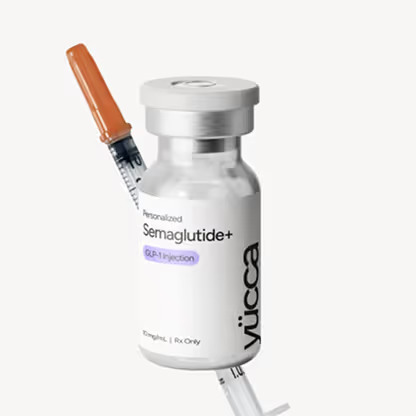
Telehealth providers can utilize compounded medications to dial in an exact, hyper-individualized dose that standard auto-injector pens cannot easily accommodate. This means your provider can adjust your semaglutide maintenance tapering schedule week by week. You might step down gradually from 2.4 milligrams to a custom fraction of that amount. This helps you find the precise sweet spot that sustains your health without over-medicating your system. To understand the full process of how individualized clinical titration works at Yücca, visit our how it works page.
Signs your semaglutide maintenance dose is working include a stable number on the scale, an absence of intense daily food noise, and a complete return of your normal daily energy levels.
When discussing long-term care, it is natural to note that brand-name GLP-1 prescriptions cost upwards of $1,300 per month out of pocket. Compounded options through specialized telehealth programs are significantly more accessible for long-term, chronic care management. This accessibility allows you to focus entirely on stabilizing your metabolism rather than stressing over exorbitant monthly expenses.
Navigating Maintenance Through Hormones and Changing Life Stages
Hormonal changes naturally and profoundly influence how your body establishes and defends a new weight set point. Estrogen shifts during perimenopause and menopause naturally lower the basal metabolic rate and increase visceral fat accumulation around the midsection. A personalized maintenance dose of semaglutide helps directly counteract this estrogen-related metabolic slowdown. Staying on a carefully tailored dose prevents the sudden, rapid weight shifts that are incredibly common during the perimenopause transition. If you are also struggling with stalls during this phase, read our guide on overcoming a weight loss plateau for additional clinical strategies.
Patients with PCOS, a hormonal disorder causing enlarged ovaries with small cysts on the outer edges, also benefit deeply from a continuous, monitored maintenance plan.
Semaglutide is highly beneficial for these individuals because maintenance doses help sustain the vital insulin sensitivity and regulated menstrual cycles that were successfully restored during the initial weight loss phase. Without ongoing medication, insulin resistance often returns swiftly and aggressively, reversing the clinical progress achieved over months of dedicated treatment. The MedlinePlus overview of weight control provides patient-friendly context on why metabolic maintenance requires ongoing clinical attention, particularly for patients with complex hormonal profiles.
While peak weight loss numbers can vary significantly based on unique hormonal profiles, some patients are highly sensitive to gastrointestinal side effects. This heightened physical sensitivity makes finding a precise, low-dose maintenance plan absolutely critical. Microdosing semaglutide for maintenance, a practice that involves taking very small amounts of the medication to minimize side effects while fully maintaining all metabolic benefits, is highly effective for these sensitive profiles. Your dedicated clinical team will evaluate your specific hormonal landscape to determine if a microdosing schedule is the most appropriate strategy for your long-term care.
Safety and timing always dictate the treatment timeline for female patients. It is vital to note that semaglutide must be stopped completely at least two months prior to a planned pregnancy due to the exceptionally long half-life of the drug in the human body. You can review full contraindication details on our semaglutide safety information page. Your telehealth provider will regularly review your metabolic health, side effects, and future life plans to ensure your dosage aligns perfectly and safely with your current stage of life.
Frequently Asked Questions
What is the normal semaglutide maintenance dose?
The FDA-approved maintenance dose for name-brand semaglutide is typically 1.7 milligrams or 2.4 milligrams weekly. However, a personalized maintenance dose may be lower. Many providers tailor the dosage to find the lowest effective amount that sustains your goal weight without causing unwanted side effects. You can review the full approved dosing schedule in the FDA drug approvals database.
How long can you stay on a semaglutide maintenance dose?
Semaglutide is generally approved for long-term chronic weight management. Many patients stay on a maintenance dose indefinitely to prevent weight regain. Your medical provider will regularly review your metabolic health, side effects, and lifestyle habits to determine your optimal timeline. Visit our frequently asked questions page for more on eligibility and long-term care options.
Can I taper off semaglutide once I reach my goal weight?
Yes, tapering off semaglutide is possible, but it must be done under medical supervision. Abruptly stopping the medication can lead to rapid weight regain and a spike in appetite. A provider-guided tapering schedule slowly reduces your dose to help your body safely adjust.
Will I regain weight if I stop taking semaglutide?
Clinical studies show that many people regain a significant portion of the weight they lost within a year of stopping semaglutide. A structured maintenance plan, alongside sustainable diet and exercise routines, is crucial for long-term metabolic health and success.
Can I split my semaglutide dose for maintenance?
You should never attempt to split doses or alter your medication schedule without explicit guidance from a healthcare provider. DIY dose splitting can lead to incorrect dosing and safety risks. Always consult your telehealth provider to safely adjust your prescription.
What is a microdosing schedule for semaglutide?
Microdosing involves taking very small amounts of semaglutide to minimize side effects while maintaining metabolic benefits. While not an FDA-standard protocol for brand-name injectables, some providers use customized plans to offer lower-dose maintenance tailored to a patient's specific clinical needs. If you are struggling with stalls, read our guide on overcoming a weight loss plateau.
You worked incredibly hard to reach your goal, and you deserve a plan that protects your progress. Partner with a clinical provider to find a comfortable, long-term solution. You do not have to navigate the transition into maintenance alone. To explore our science-backed treatments at tryyucca.com, connect with our clinical team to craft a customized compounded semaglutide maintenance plan that fits your exact metabolic needs.
This article is for informational purposes only and does not constitute medical advice. Always consult a qualified healthcare provider before starting any new medication or treatment. Results may vary. Compounded semaglutide and compounded tirzepatide have not been approved or evaluated by the FDA for any indication.
References
- Wilding JPH, Batterham RL, Davies M, et al. Weight regain and cardiometabolic effects after withdrawal of semaglutide: The STEP 1 trial extension. Diabetes Obes Metab. 2022;24(8):1553-1564. Available from: https://pubmed.ncbi.nlm.nih.gov/35441470/
- Rubino D, Abrahamsson N, Davies M, et al. Effect of Continued Weekly Subcutaneous Semaglutide vs Placebo on Weight Loss Maintenance in Adults With Overweight or Obesity: The STEP 4 Randomized Clinical Trial. JAMA. 2021;325(14):1414-1425. Available from: https://jamanetwork.com/journals/jama/fullarticle/2777886
- The BMJ. Weight regain after cessation of medication for weight management: systematic review and meta-analysis [Internet]. London: The BMJ; 2026 Jan [cited 2026 May 18]. Available from: https://www.bmj.com
- Vanderbilt University. Prolonged semaglutide treatment reveals distinct stages of weight loss, maintenance, and regain [Internet]. Nashville (TN): Vanderbilt University Basic Sciences; 2026 Feb [cited 2026 May 18]. Available from: https://medschool.vanderbilt.edu/basic-sciences/
- National Center for Biotechnology Information. Semaglutide [Internet]. Bethesda (MD): National Library of Medicine; [cited 2026 May 18]. Available from: https://www.ncbi.nlm.nih.gov/books/NBK551568/
- Centers for Disease Control and Prevention. Obesity [Internet]. Atlanta (GA): CDC; [cited 2026 May 18]. Available from: https://www.cdc.gov/obesity/index.html
- U.S. Food and Drug Administration. Postmarket Drug Safety Information for Patients and Providers [Internet]. Silver Spring (MD): FDA; [cited 2026 May 18]. Available from: https://www.fda.gov/drugs/postmarket-drug-safety-information-patients-and-providers
- U.S. Food and Drug Administration. FDA Drug Approvals Database [Internet]. Silver Spring (MD): FDA; [cited 2026 May 18]. Available from: https://www.accessdata.fda.gov/scripts/cder/daf/
- MedlinePlus. Weight Control [Internet]. Bethesda (MD): National Library of Medicine; [cited 2026 May 18]. Available from: https://medlineplus.gov/weightcontrol.html
- Drugs.com. Wegovy (semaglutide) drug information [Internet]. [cited 2026 May 18]. Available from: https://www.drugs.com/wegovy.html


